Australia Did It Review: Brilliant Stations, Boring Train Rides
Rami Ismail's train defense game has one of the smartest unit-merging systems of the year, plus a passive train half and a stingy interface. Score: 7/10.
Luka Perić
Thursday, November 26, 2026
What it is
Australia Did It: End-of-the-World Railway Defense Business came out on November 17 on PC via Steam. It is developed by Rami Ismail - the Vlambeer co-founder - together with Aesthetician Labs, and published by Mystic Forge. The setup: the Atlantic Ocean has dried up, and you escort cargo by train across what is left, defending each station against mutated creatures, machines and soldiers.
A note on how I got to this verdict: it is based on the Steam page, user reviews and the published critic reviews, not on a finished playthrough of my own.
How it plays
The game has two halves, and they are not equally good.
At each station you fight a turn-based defense on a grid, with enemies arriving from four directions. Surviving turns and killing enemies earns cindermint, which you spend on new defenders. The trick is merging: two units of the same level combine into a stronger one, and mixing different types creates entirely new units. The store page claims more than 1,500 combinations across 30+ unit types. You also decide how long to stay - waiting longer heals the train and earns more, but the pressure grows.
Then the survivors board the train and the game turns into a short autobattler. Your units fire on their own; you aim a focus cone and trigger an ultimate ability, and that is about it.
The highs
The station defense is the real thing. Game Informer gave the game 8.75 largely on the strength of the merge system and the improvisation it forces, and that matches what the design promises: every merge is a gamble between a unit you know and a unit you need. Runs do not lean on meta-progression either - you get better, your numbers do not.
The lows
The train rides are the weak half, and even the positive reviews say so. They are passive and take control away exactly when the stakes are highest. The interface is the second problem: Cubed3, which scored it 4/10, points out that units do not show damage or range, and reports a cursor that gets lost on the board and an unreliable rewind. So Many Games adds that there are few safeguards against misclicks. In a tactics game, missing information is not a small flaw.
The reception reflects that split: a Metascore of 73 from eight critics, and 82% positive from 45 user reviews on Steam when I checked.
Price and practical stuff
The base price is 14.99 euros, with 10% off (13.49 euros) until December 1. Single-player, Windows only on the store page. The interface is in eleven languages, with English audio. It runs on very modest hardware, and there is a free demo.
Verdict
Half of a great tactics game attached to a filler minigame, with a UI that needs a patch. If merging units and squeezing out of a station on the last turn sounds like your thing, it is worth the price. Everyone else should try the demo first.
Score: 7/10
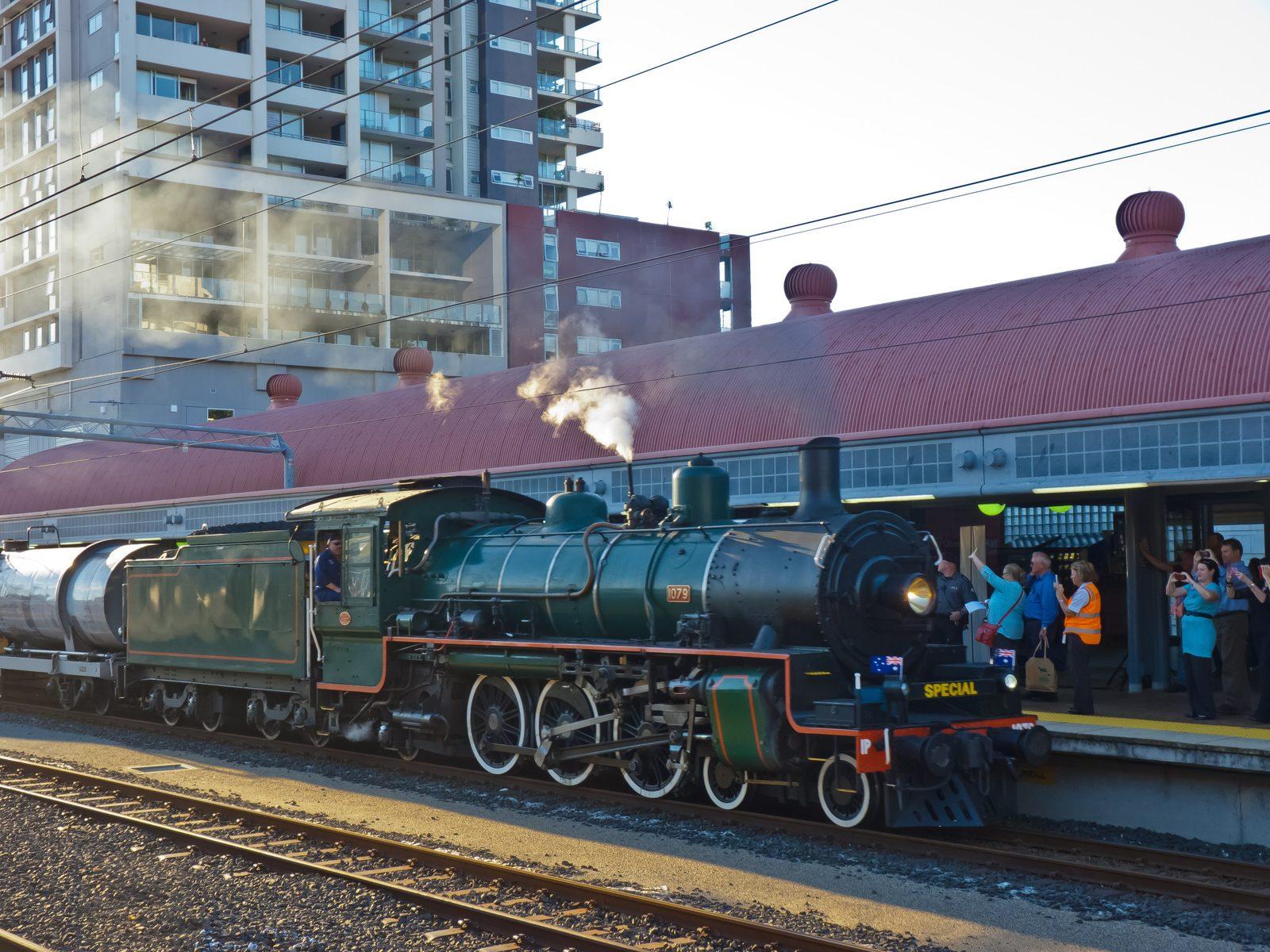
Image: John Robert McPherson / CC BY-SA 4.0, source: https://commons.wikimedia.org/wiki/File:Anzac_Troop_Train_arrival_Platform_10_Roma_Street_railway_station_Roma_St_Brisbane_P1400566.jpg