Honeycomb: The World Beyond Review - Great Science, Bad Snacks
Frozen Way's combat-free survival game has the smartest science systems in the genre this year - and some of its most tedious chores. Score: 6/10
Luka Perić
Saturday, September 12, 2026
Honeycomb: The World Beyond is the survival game for people who are tired of survival games - or at least tired of the part where you punch a tree, then a wolf, then a bigger wolf. Frozen Way, the Krakow studio that co-created House Flipper, released it on September 8 for PC (Steam and Epic), PS5 and Xbox Series X|S, with Snail Games publishing. I've spent the week on Sota7 and came back impressed, frustrated and a little bit hungry.
What it is
You play Hennessy O'Quinn, a bioengineer from a dystopian underground society on Earth who has barely seen nature with her own eyes, now sent to study the ecosystem of an alien planet. There is no killing. You can't hunt the wildlife - the most you can do is stun something that gets too pushy, or better, befriend it. Instead of one sci-fi multi-tool that scans everything, you carry a kit of separate instruments, each with its own job, and your base holds a proper lab where samples get analysed.
The good stuff
The bioengineering is the reason to play. Honeycomb borrows real agricultural techniques - allogamy (cross-pollination) and grafting - and turns them into its core loop. You find a plant with a trait you want, another with a trait you need, and work out how to combine them. Animals can be bred too, with visible physical changes. When it clicks, it feels like actual research rather than a crafting menu wearing a lab coat. The identify-then-interact rhythm of swapping instruments is the most satisfying take on "scanning" I've played in a long time.
Sota7 also looks fantastic. The biomes are colourful and dense, fog and rain sell the atmosphere, and on PC it ships with the full NVIDIA package (DLSS 4.5, frame generation, Reflex) - it ran smoothly for me. Base building opens up early and is generous, and crafting pulls straight from storage, a small mercy more survival games should copy.
The bad stuff
Then there's food. Hunger drains over roughly 24 in-game hours and thirst over 16, which sounds lenient until you realise how much of this planet you cover on foot. Farming is slow enough that foraging beats it, so too many of my sessions turned into snack runs between the interesting bits. For a game that sells itself as meditative, the stomach meter is the least relaxing thing in it.
It's also less of a sandbox than the marketing suggests. Story missions are fairly strict about what you do and when, the map hands you resource locations far too readily (which undercuts the explorer fantasy), and hunting tiny insects for scan quotas becomes a chore. I had a couple of crashes while reworking my base, and other players report the same. It's single-player only; the developers have said co-op would take months of extra work.
Who it's for
If you loved the calm parts of Subnautica, or you want a survival game where curiosity beats combat, there's something here nobody else is doing. The main story runs 15-20 hours by the developers' own estimate, closer to 30 if you poke into everything. In our region it's standard EU pricing - 30.49 euros on Steam, with 15% off until September 15 - and there's no Croatian localisation, so locally you'll be playing in English or one of the other twelve supported languages. If you need tension or a truly free-form sandbox, wait for patches.
Verdict
Honeycomb has the most original idea I've seen in the survival genre this year and buries it under chores it never needed. Fix the food loop, loosen the leash, and this becomes an easy recommendation. Right now it's a promising experiment - worth it for the science, not for the snacks.
Score: 6/10
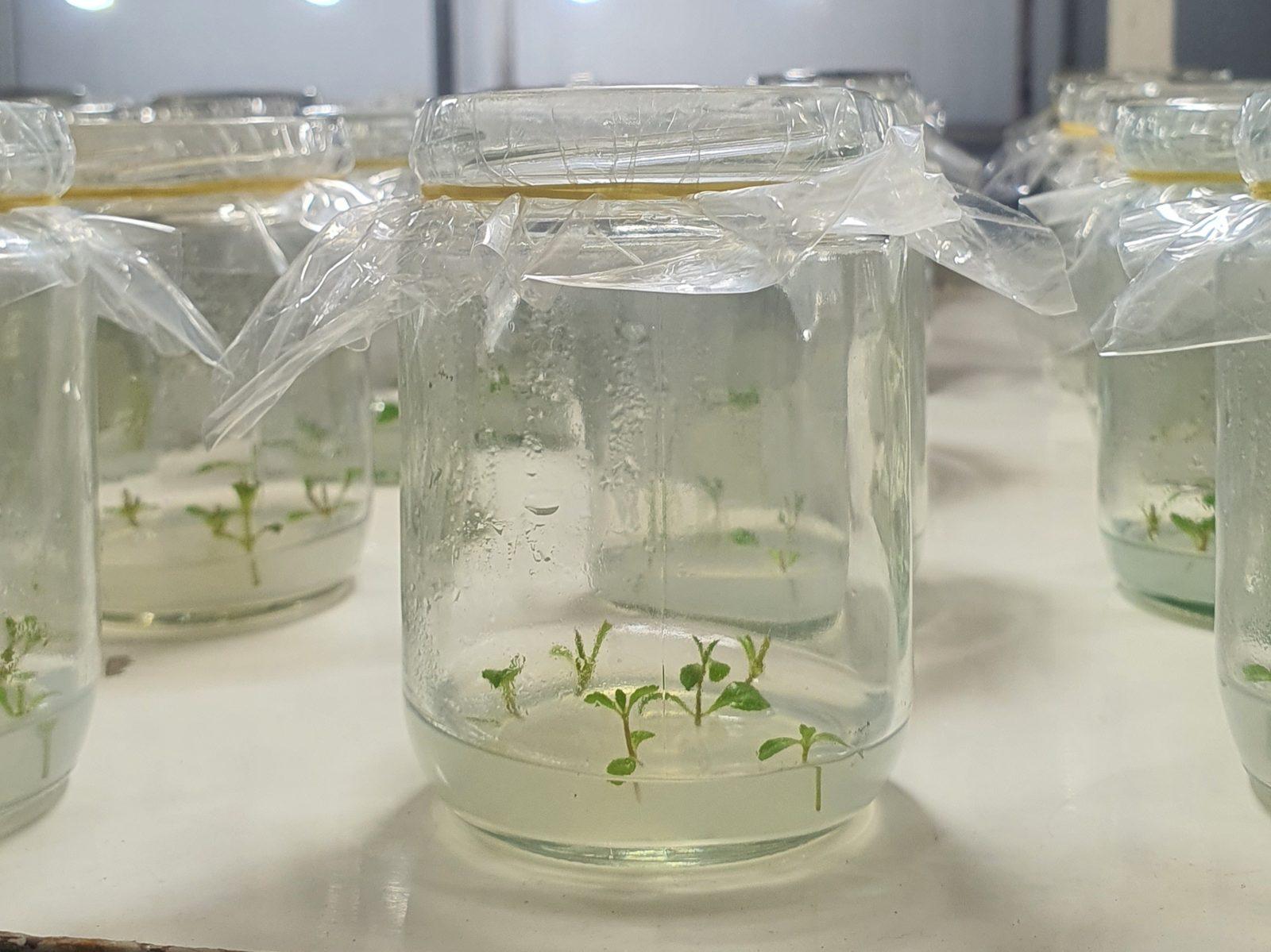
Image: Angphotorion / CC BY-SA 4.0, source: https://commons.wikimedia.org/wiki/File:Plant_tissue_culture.jpg