
Steam Frame hits $1,059 - I buy Valve's RAM excuse, not the missing charger
Valve's Steam Frame opens reservations at $1,059 (€1,049), and Valve admits the memory crisis pushed it above the price it wanted. The RAM excuse holds up. The missing charger doesn't. The real test is streaming latency.
Rene Sjeverac
Tuesday, September 15, 2026
Sixteen gigabytes of LPDDR5X. That's what sits inside the Steam Frame, and in 2026 that line on the spec sheet costs a lot more than it did when Valve first showed the headset last November.
Reservations opened on September 14 and the price is finally public: $1,059 for the 256GB model, $1,299 for 1TB. In Europe it's €1,049 and €1,279. And Valve isn't pretending that's where it wanted to land. Speaking to PC Gamer, the company admitted it had been targeting a lower price before the memory crisis hit, summed up in one very 2026 sentence: "I wish we could have shipped it at the price that we were at last year."
I believe them. Anyone who has priced a DDR5 kit or an NVMe drive recently knows the component market has been ugly. Strip the Frame down and it's a Snapdragon 8 Gen 3, 16GB of fast memory and up to a terabyte of flash - basically a flagship phone strapped to your face with two 2160x2160 panels on top. When memory makers point their output at data centres, everything downstream pays. Valve had signalled it wanted to come in under the old Index kit's $999. It didn't make it, and at least it said so out loud instead of hiding behind "premium positioning".
What I don't buy is a thousand-dollar device with no power brick in the box. The charger is a separate purchase, as is the ergonomic accessories kit. Sure, any 45W-plus USB-C charger works and most of us have one in a drawer. It's still the phone-industry move nobody asked Valve to copy.
Now the part I actually care about. The Frame's big trick is eye tracking driving foveated rendering and foveated streaming - full detail only where your eyes are pointing, less everywhere else. Valve calls that the breakthrough that made a native 64-bit ARM build of Half-Life: Alyx possible. Alyx ships with every unit, runs standalone, and cloud saves carry over when you switch to streaming from your PC. That's a genuine engineering flex, and far more interesting than the price discourse.
But I'm a latency guy, so my question is blunt: what does the motion-to-photon chain look like when you're streaming from a PC over the included 6GHz Wi-Fi dongle, with eye tracking deciding where the pixels go? Foveation that trails a fast eye movement is visible, and in anything twitchy - Pavlov, Beat Saber on Expert+, any shooter with real flicks - that's the number that makes or breaks it. The panels run 72 to 120Hz, with 144Hz listed as experimental. I want frame-time graphs and measured latency, not a spec sheet.
Buying one is its own mini-game: a reservation lottery that closes September 17 at 10am Pacific, a randomised queue, then purchase emails to whoever lands a spot. After the GPU launches of the last few years, I'll take a lottery over a bot-swarmed add-to-cart button any day.
The bigger problem isn't the lottery or the charger. As PC Gamer points out, the Frame lands in one of the slowest periods for VR on Steam, and Valve says it wants to "rekindle the excitement" for PCVR. A $1,059 entry fee won't do that by itself. A headset that makes PC streaming feel like a cable is plugged in might. If the latency holds up, the Frame is that headset. If it doesn't, it's a very nice, very expensive Alyx machine.
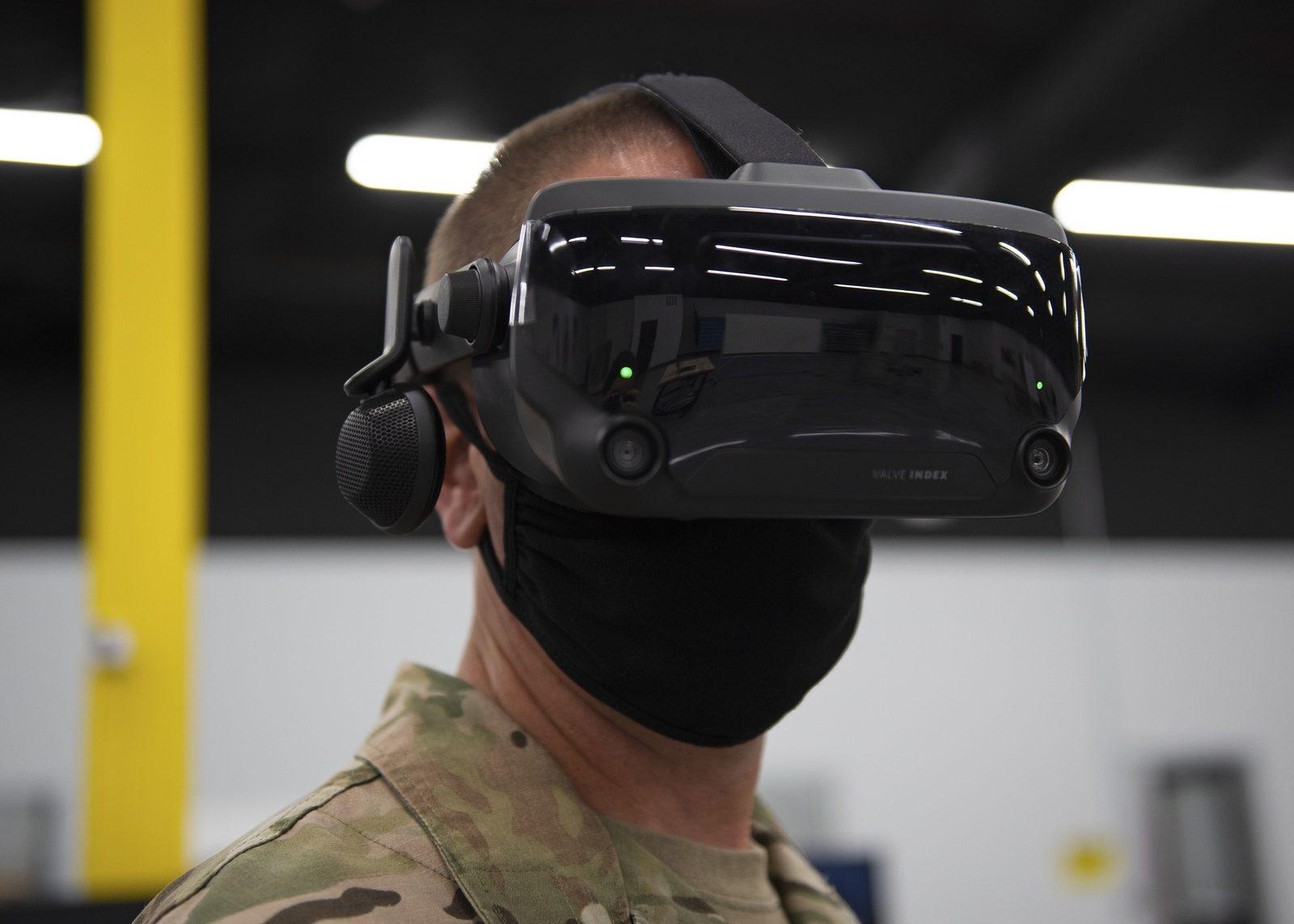
Image: Airman 1st Class Robyn Hunsinger / Public domain, source: https://commons.wikimedia.org/wiki/File:Air_Force_officer_using_Valve_Index.jpg